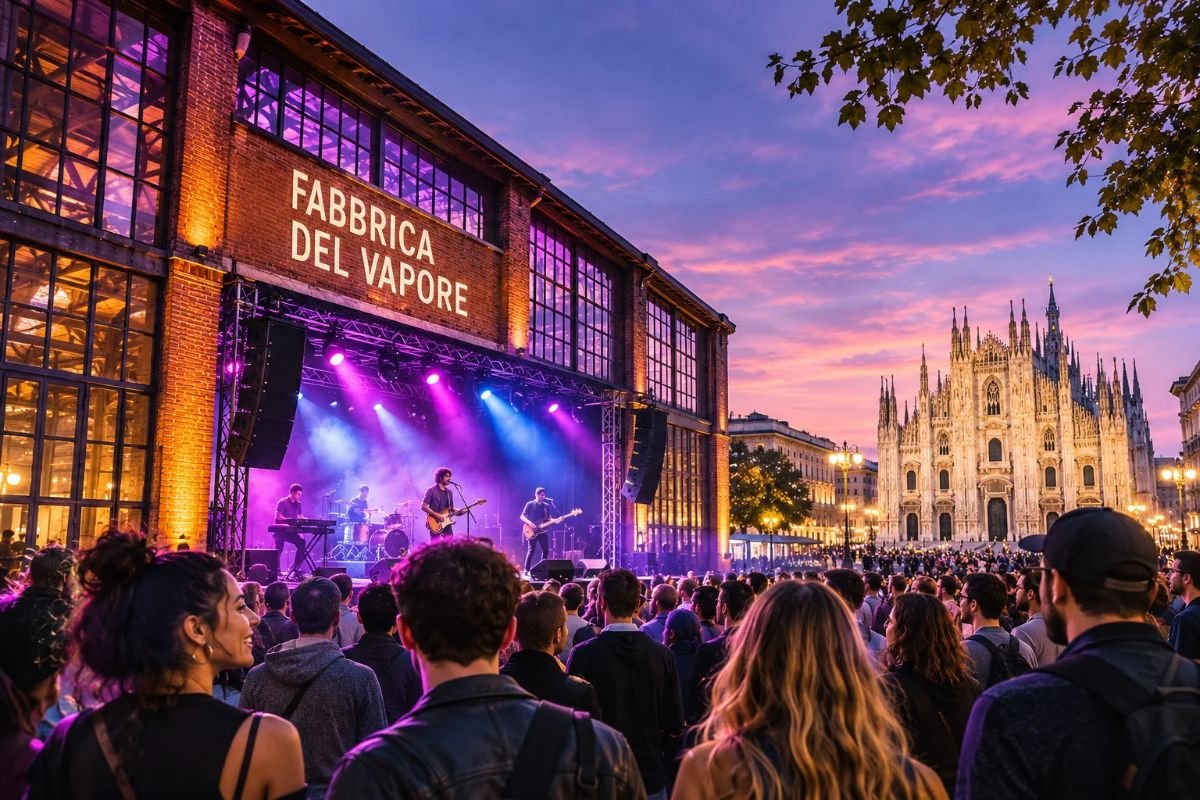


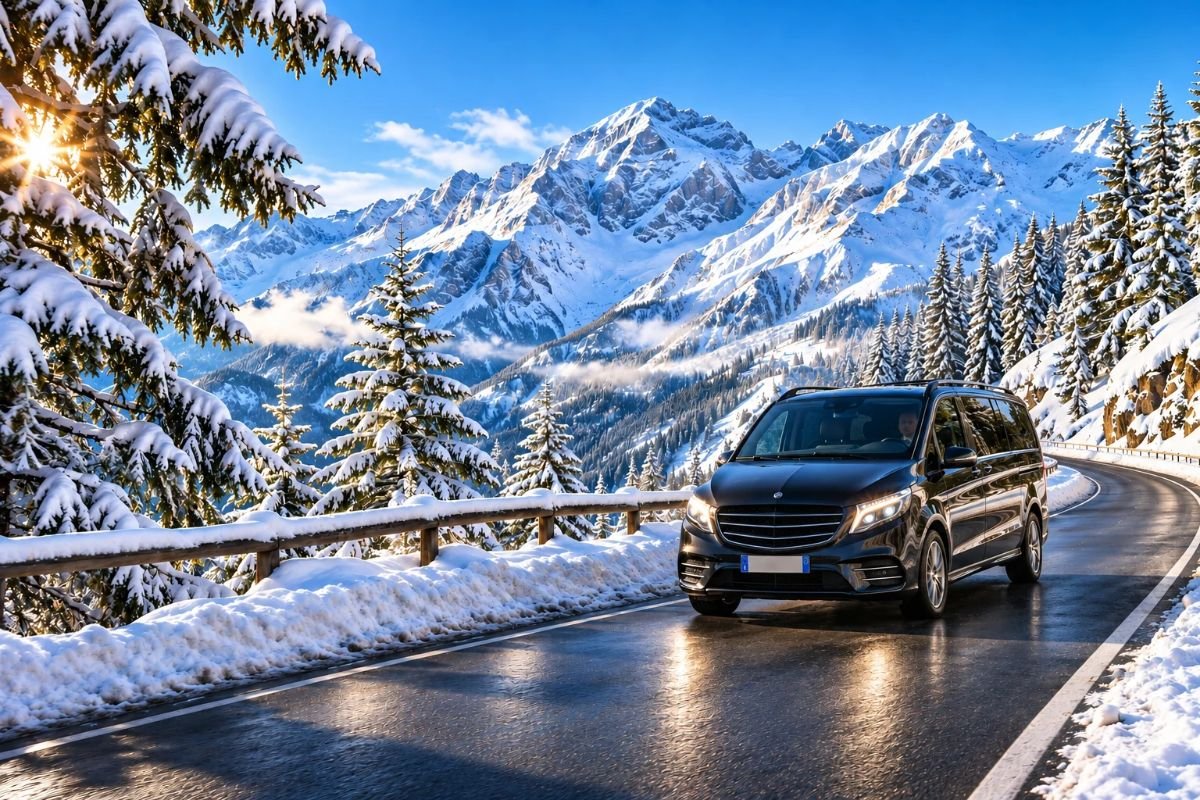
Snow has already fallen in the Italian Alps, and the 2026/2027 ski season is getting under way. Cervinia is welcoming early-season skiers, while Courmayeur, La Thuile and Livigno are preparing for late-November openings and Bormio is scheduled for December. Milan Malpensa Airport connects these mountain destinations with international flights and private road transfers.
Malpensa Airport – an arrival point for the Italian and Swiss Alps
Milan Malpensa Airport (MXP) lies northwest of Milan and has two passenger terminals. Its position makes it practical not only for visiting Lombardy but also for continuing towards the Aosta Valley, Piedmont and certain Swiss Alpine resorts. For many mountain journeys, driving straight from the airport avoids an unnecessary detour through central Milan, with the final itinerary determined by the destination and current road conditions.
A mountain transfer begins with details that matter less on an ordinary city journey: the arriving terminal, bulky sports equipment, the precise chalet or hotel address and possible restrictions on mountain access roads. Passengers carrying skis or snowboards may receive them from a separate oversized-baggage area, so the time needed to leave arrivals can differ from that of passengers with hand luggage only. A private driver and passengers agree a meeting point for the correct terminal.
Snow has arrived – but ski areas do not all open together
The first November snowfalls have changed the appearance of Alpine valleys and higher slopes. Snow-covered peaks make the approaching season visible, yet a white landscape does not automatically mean that every lift or run is operating. Wind, temperature, avalanche-control work, grooming and snow depth all influence the opening of individual sectors, particularly during the first weeks of the winter timetable.
Cervinia began its 2026/2027 winter season on 24 October, with further pistes and lifts planned to open as conditions allow. Courmayeur and La Thuile in the Aosta Valley are scheduled for 28 November, as is Livigno in Lombardy; Bormio has an announced opening of 4 December. These dates describe planned resort operations rather than a guarantee that the whole ski area will be accessible on a particular day. Early visitors may also enjoy the village atmosphere before most skiing begins.
Cervinia and Valtournenche – an early start beneath the Matterhorn
Breuil-Cervinia stands at roughly 2,050 metres in the shadow of the Matterhorn. Its altitude explains why the season begins sooner than at many lower-lying resorts. By mid-November some high-altitude facilities are already operating and the resort can add pistes as winter conditions settle. The amount of snow in the village may differ substantially from the conditions around Plateau Rosà, so lift and piste reports give a more useful picture than a photograph of the town alone.
The road journey from Malpensa follows the motorway network across northern Italy and into the Aosta Valley. After leaving the main valley near Châtillon, the route climbs through Valtournenche towards Cervinia. The final approach includes bends, gradients and exposed sections that can change character rapidly during snowfall. Even if the motorway is dry, the last mountain kilometres may be icy, and an indicated journey time should never be treated as guaranteed.
For passengers travelling with several pairs of skis, a direct car journey removes the need to change between regional trains, buses and local resort transport. The actual drop-off point still depends on the hotel's position, pedestrian restrictions and whether the access road has been cleared. Travel to the higher ski area remains subject to the resort's own lift arrangements rather than the road transfer itself.
Courmayeur – winter at the foot of Mont Blanc
Courmayeur occupies the western part of the Aosta Valley beneath the Mont Blanc massif. The resort combines mountain scenery with an established town centre, restaurants, hotels and access to nearby valleys. The main ski area's planned opening on 28 November makes the second half of November a period of preparation, when the town is already taking on its winter character even if the principal lifts have not yet begun regular operation.
From Malpensa, the driving route heads towards the Aosta Valley on motorways and then continues west towards Courmayeur. Much of the distance uses major roads, but the last approach to a hotel, apartment or chalet may involve narrower streets and local restrictions. The precise property address matters because some accommodation is outside the central town and may require a different approach road from the one used for the ski lifts.
The surroundings offer more than downhill skiing. The thermal facilities at nearby Pré-Saint-Didier, traditional Aosta Valley cuisine and the landscapes of Val Ferret and Val Veny attract visitors throughout the colder months, subject to seasonal access. For families arriving together, an appropriately sized private vehicle can carry passengers and winter clothing to their accommodation in one journey, without suggesting that the airport portal itself operates the service.
La Thuile – Italian slopes and the winter closure of the pass
La Thuile lies near the French border and belongs to the Espace San Bernardo ski area, associated with La Rosière across the mountains. The Italian sector is scheduled to open on 28 November 2026. Fresh snowfall makes the upper slopes look ready for winter, but the cross-border ski connection and individual lifts have their own operating conditions and must not be confused with the opening of the village itself.
Driving from Malpensa generally means following northern Italian motorways into the Aosta Valley, continuing towards Pré-Saint-Didier and climbing the last section to La Thuile. The Little Saint Bernard road pass closes for the winter season, so a road map suggesting a direct drive onward over the pass into France can be misleading. Access to La Thuile from the Italian valley remains possible, while the cross-border road itself is unavailable during its seasonal closure.
ItalianAirports.eu has a dedicated Malpensa Airport to La Thuile private transfer page. Its indicative route data gives approximately 230 kilometres and 3 hours 25 minutes under ordinary conditions. Winter snowfall, traffic and local access can change the actual duration considerably. A journey to a hotel on a cleared village street may be very different from a trip to an isolated chalet further up the valley.
Livigno – a high mountain valley with several access routes
Livigno is situated at approximately 1,816 metres in a high valley of northern Lombardy, close to the Swiss border. Known for skiing, snowboarding and a long winter season, it is preparing for its announced opening on 28 November 2026. The arrival of early snow creates a wintry setting, but the operating status of the pistes, snowparks and lifts depends on the resort's daily announcements.
A road journey from Malpensa to Livigno involves a different part of the Alps from the western resorts of the Aosta Valley. Possible approaches pass through Lombardy and, depending on the itinerary, may involve Swiss territory or access corridors with special winter rules. Some mountain passes are seasonal, and the shortest route displayed in summer is not necessarily the route available in November or January.
The chosen route is particularly important for late flights or transfers with large ski bags. A private journey avoids repeated changes of transport, but cannot remove weather-related restrictions or guarantee an unrestricted mountain approach. Confirming the exact accommodation address and the road that will actually be used is more useful than comparing straight-line distances between Malpensa and Livigno.
Bormio – ski racing traditions and thermal waters
Bormio, in Alta Valtellina, combines an old Alpine town with demanding ski terrain and a long tradition of international competitions. It is also known for thermal bathing, which makes the destination attractive to visitors whose plans extend beyond skiing. The main resort's announced 2026/2027 season opening is 4 December; snowfall in November should therefore not be presented as evidence that the full ski area is already open.
The road from Malpensa runs eastwards through Lombardy before approaching the upper Valtellina. This is a longer mountain journey than a simple airport-to-city transfer and may include slow stretches in valleys with holiday traffic. Conditions on the approach can change between daylight and night, even when the major roads farther west remain clear.
For several travellers arriving with sports equipment, an appropriately equipped minivan may make the road journey simpler than combining trains and local buses. Bormio's centre, hotel districts and surrounding accommodation are not all at the same address, however, so door-to-door travel needs a properly specified destination. The return flight should also be planned around possible winter delays in the valley.
St. Moritz – from Malpensa into the Swiss Engadin
St. Moritz is one of the best-known Swiss Alpine resorts, set in the Upper Engadin among high mountains and lakes. A road journey from Malpensa typically heads towards Lake Como and Chiavenna, crosses the Italian–Swiss border and continues through the Bregaglia valley and the Maloja area towards the Engadin. The Maloja road is used in winter, but heavy snowfall, road controls or severe conditions can still cause temporary restrictions.
The private transfer from Malpensa Airport to St. Moritz has a dedicated page on ItalianAirports.eu. It gives an indicative distance of 185 kilometres and a travel time of 3 hours 15 minutes, figures that are useful as a starting point but cannot guarantee an arrival time in snow or holiday traffic. The fact that the destination lies in Switzerland also makes documents, border checks and local driving rules relevant to the itinerary.
A private car can carry luggage directly to a hotel in town or an agreed location in the Engadin, subject to vehicle access. The type of car matters more with skis, boots and several large cases than it would for a short business transfer. Different accommodation addresses around the valley may also alter the final stretch of the drive.
Crans-Montana – a second Swiss destination from Malpensa
Crans-Montana is situated above the Rhône valley in the Swiss canton of Valais and is known for mountain panoramas, winter activities and high-altitude accommodation. It offers a different Alpine setting from St. Moritz and the resorts in the Italian Aosta Valley. Visitors travelling from Malpensa cross an international border and must account for the state of mountain roads and the precise location of their hotel or chalet.
The existing Malpensa Airport to Crans-Montana transfer page gives an approximate road distance of 215 kilometres and an indicative journey time of 3 hours 20 minutes. These are planning figures, not a promise from a transport operator. Weather, the route selected on the day and possible temporary restrictions can change the time required to reach the resort.
The Swiss destination also involves a different set of practical details: travel documents, any applicable border procedures, road conditions and the operator's ability to perform an international transfer. The chosen company confirms its own service, vehicle and final conditions directly. An information page listing a route does not mean that every carrier shown can necessarily operate it on a given date.
Winter roads – why a mountain transfer needs a different plan
Fresh snow may be concentrated at altitude while the motorways around Malpensa are completely dry. A drive that begins as a routine motorway journey can end on a narrow ascent with bends, low visibility or ice. Snow clearance, temporary traffic controls and conditions at the destination often have a greater impact on the final part of a journey than the total number of kilometres suggests.
The vehicle must be suitable for the route and the winter conditions, including the equipment required under the applicable road rules. Winter tyres or the appropriate traction equipment are particularly relevant on Alpine roads, but they do not override official closures or make severe weather harmless. A professional operator decides how the journey can be performed safely under the conditions actually encountered.
The time shown by a mapping application is therefore only a reference. A weekend changeover, heavy snow or a late-night arrival can alter the journey even when the flight itself lands on schedule. For cross-border routes, road and border requirements add another element that does not arise on a simple drive into Milan.
Skis, snowboards and luggage – matching the vehicle to the group
Winter visitors often carry more than a conventional suitcase. Ski and snowboard bags are long, boots are bulky and several travellers may also bring helmets, children's equipment and winter clothing. The number of passenger seats alone does not prove that a vehicle has enough usable space for all those items; boot dimensions and seating arrangements make a substantial difference.
A sedan can be appropriate for a small party with ordinary luggage, while a minivan or minibus may be more practical for families or groups with multiple equipment bags. Even then, luggage capacity needs to be considered alongside the number of occupied seats. The selected operator confirms whether the vehicle can accommodate the actual equipment without restricting safe seating.
A direct transfer also helps keep a travelling party together from the airport to the accommodation. That convenience is especially clear when the alternative involves carrying long ski bags through a railway station and changing to a local mountain bus. It does not remove the need to establish the correct terminal, pick-up location and road-access arrangements at the destination.
Airport arrivals and the return journey to Malpensa
Terminal 1 and Terminal 2 at Malpensa are separate arrival points, each with its own procedures. After baggage collection, passengers meet a private driver at the location agreed with the operating company, which is not necessarily the general taxi rank. Oversized ski equipment, a delayed aircraft or checks after arrival can affect the time at which the party is ready to leave the terminal.
The return trip from the mountains is often more time-sensitive than the outward journey because a delay can affect check-in and boarding. A snowy early morning, a traffic queue leaving the valley or a temporary road restriction can upset an otherwise familiar itinerary. The airport terminal and the airline's baggage rules for sporting equipment also matter: arriving at the wrong terminal or underestimating oversized-baggage procedures can create unnecessary problems.
In busy holiday periods, mountain roads can carry heavy traffic at predictable changeover times. For flights from Malpensa, the overall schedule must allow for the mountain drive and the airport processes separately. The precise pick-up and arrival arrangements remain a matter for the operator and the passengers rather than a service provided by ItalianAirports.eu.
The first snow marks the start of the Alpine travel season
By mid-November 2026, snow has returned to the mountains and the winter season is beginning in stages. Cervinia already has early-season skiing, while Courmayeur, La Thuile, Livigno and Bormio are approaching their announced opening dates. Across the border, St. Moritz and Crans-Montana offer further destinations with different landscapes, access roads and winter schedules.
Malpensa links those places with international air travel. Private transfers can make the connection from aircraft to mountain accommodation more straightforward for passengers carrying skis and several bags, provided the route and vehicle are appropriate for the conditions. The essential distinction is clear: beautiful early snow creates the anticipation of winter, while lift operations and mountain road access continue to depend on their own current conditions.